(As this was an impromptu speech that I just finished, the recording may contain some inaccuracies. I haven’t had time to check it yet. Please bear with me and feel free to offer your corrections!)
Please everyone after reading this article, then, conduct a comprehensive and profound comparison with the documentary films about Tibet from those years. Look beyond the surface phenomena to see the essence, and examine how many shared fates and logical outcomes there are?
Today, we have revealed an astonishing truth to all of humanity around the world. Western countries have caused the general public to live a life worse than death. First, we give a definition to this “worse than death.” It defines a situation where living is even worse, more painful than death. In more cases, it is a metric where the birth rate becomes far, or increasingly, lower than the death rate. Or in other words, the death rate is increasingly higher than the birth rate.
This refers geographically to Western countries, such as Western Europe, North America, and also all countries in the world that implement similar systems to Western ones. For example, in Asia: Japan, South Korea, and Taiwan of China. These countries that have similar systems also share a similar “worse than death” situation.All right, so we then take this objective measure, this hard metric where the death rate increasingly surpasses the birth rate, a standard with verifiable data, and we compare it across the entire world simultaneously.In the past, the world’s most populous country, China, held the largest population, and China’s population had always steadily grown. Even during what the West considered Mao Zedong’s so-called autocratic rule, at its poorest time, China’s population was not just stable but rapidly growing. Likewise, India is still growing today. There are also many other countries in Asia, and even Africa—often disparaged by the West as the poorest region—where populations are steadily growing. Notably, Nigeria—such a small place—has now exceeded 200 million people. There are many countries worldwide maintaining population growth, but we are just mentioning these key examples to form a stark contrast. When we compare these Western countries with those nations in Asia and Africa, where populations are still growing, we can identify—or even determine—the fundamental reason. The root cause of why some places have more living and others more dying lies in the fact that these two major camps implement completely different real estate tax systems. In the West, their system is: as long as you own property, I will levy tax on you, even if you are living in a so-called public apartment that isn’t privately owned. And these taxes are extremely high—high enough to support at least one family member’s monthly living expenses. Moreover, the proportion and absolute amount of tax levied is decided by the government. How the tax is used is also decided by the government.
In contrast, these countries with growing populations almost do not levy any property division tax.So, is the levying of real estate taxes a critical reason that distinguishes these two phenomena? Well, let’s not jump to that conclusion just yet.
Let’s first analyze the main differences between these two groups of countries. The biggest difference we can examine is their geographical environment, because humans are products of nature and cannot be separated from it. But when we compare, it’s startling. Western Europe, North America, and even Japan and South Korea are the countries with the best geographical environments in the world. Take Western Europe, for example: it’s either broad plains or gentle rolling hills, or like the Alps—top-tier natural scenic beauty. In other words, all of Western Europe is a land perfectly suited for human habitation and aligned with human aesthetic needs—a paradise on Earth. North America, like the U.S. and Canada—excluding the far north that’s covered in ice—has fertile soils, plains, prairies, plateaus, and evenly distributed hills and mountains. These two regions, Europe and North America, have abundant water resources. The U.S. and Canada alone, with the Great Lakes, account for nearly one-fifth of the world’s freshwater. Water is the source of life—not just humans but all living beings rely on it. In these Western lands, they have mountains when needed, water when needed, plains when needed. Their geography is unique, unrivaled globally, and if we ranked them by level, they would be top-tier.
Even within broader Europe, Western countries include the Nordic nations—Norway, Sweden, and Finland—whose geography is also quite favorable. You see, they have majestic highlands or vast plains. Finland is known as a land of a thousand lakes, rich in water resources, often seen as blessed lands. So the entire Western world has a top-notch geographical environment. Now, consider the climate: they also sit in some of the best climate zones on Earth. It’s as if nature custom-crafted ideal climates for them. You’d think Western Europe’s high latitude would mean cold, but the Gulf Stream brings warmth from the Atlantic, from the UK all the way to Norway. It provides warmth, abundant precipitation, and creates a classic temperate maritime climate. We all know that the best climate for human habitation is temperate—and even better if it’s maritime, because it’s stable and mild year-round. This climate is perfect in Western Europe. As you move east, this advantage fades, but when you reach the Pacific and North America—the U.S. and Canada—they also benefit from temperate maritime climates. Although the Rocky Mountains block further inland influence, don’t forget that North America stretches north-south, and on its east and west are oceans. Thus, even its central and eastern parts combine continental and maritime climates. So North America too is mild and abundant year-round. Yes, winters are long, but the temperatures are not extreme in most places. Plus, that winter snow helps the land, soil moisture, water flow, and even plant
In addition, let’s add the factor of soil. We all know that in temperate regions, as long as rain washes through, vegetation flourishes. When vegetation is abundant, after tens of thousands of years of geological change, the soil becomes black soil—extremely fertile. Western Europe, including the UK, is fertile to the point that even riverbeds are black—rich not only in soil nutrients but also water nutrients. With such favorable natural conditions, even without any industry, local people could live well just through natural agriculture. People need to live, and ultimately, that means relying on food. The most essential is food—and meat is a major part. For meat, you need livestock. Western Europe has abundant natural pastures, so if they manage grazing well, they’ll never lack beef or lamb. And if they need grains like wheat or barley, they have fertile soil. So in terms of food, Western Europe and North America are fully provided for. You don’t need huge engineering
Now, let’s compare the other group of countries. First, we look at those where populations are still growing, like India and parts of Africa. India has become the world’s population giant, a furnace, breaking terrifying records in human history. Why? This heat is not accidental but due to its geographical environment. It’s in a tropical monsoon climate. The Himalayas block northern cool air, so local heat can’t escape. The surrounding ocean doesn’t cool it but traps humidity, making the heat humid. Thus, the average temperature is 40 to 50°C, not suitable for human habitation and pushing people toward the brink of death.
The main reason lies in the monsoonal climate. Whenever it’s a monsoonal climate, the conditions are harsh. Apart from deserts that don’t receive rain, the monsoonal climate is one of the worst climate conditions when it comes to rainfall patterns.
The biggest characteristic of a monsoonal climate is irregular rainfall. When it rains, it pours in a concentrated period. When it doesn’t rain, it’s extremely prolonged and dry. In India, with its tropical monsoonal climate, when it doesn’t rain, it’s extremely dry. The sun not only evaporates moisture but also intensifies the heat, making it deadly. When it does rain, it’s torrential. Thus, while most of India seems not short of water and not desertified, some areas are indeed desertifying. For a country like India, with over 3 million square kilometers, though it has vast farmland, this farmland results from generations of Indians working hard to cultivate it. Overall, India is not very suitable for human habitation.
So, the fact that India this year saw such world-class extreme heat is not an accidental or sudden event. It’s the result of its geographical environment and climate. Now, let’s look at China. China’s latitude is slightly higher, but China faces less ocean than India. Thus, China’s main agricultural plains have a temperate monsoonal climate, which also means the same drawbacks: concentrated rain when it comes, drought when it doesn’t. Thus, throughout history, China has constantly struggled against water—floods and droughts. Overall, it’s also not ideal for human life.
Although China’s vast plains—like the North China Plain or the Northeast Plain—have concentrated rain when it falls and drought when it doesn’t, they still have rainfall. But over two-thirds of China—its northwest and west—consists of vast deserts like the Gobi, with even less rainfall, making it less suitable for habitation. In the southwest, bordering India, is the Tibetan Plateau. It’s not because of abundant rain but due to its high altitude that temperatures drop—6 degrees per kilometer of elevation. At over 4,000 meters, temperatures are low. Although snowmelt provides water, the oxygen is scarce, making it unsuitable for human living.
In southeastern China, it is a subtropical monsoon climate. Although rainfall is more abundant, the region is mostly mountainous and hilly, making it unsuitable for large-scale agriculture, unlike mechanized farming in the West. Thus, agricultural yields are not high, similar to Japan, where arable land is limited. Consequently, it cannot support large populations easily. Additionally, many typhoons affect the region, and combined with continental climate influences, rainfall also becomes concentrated, displaying monsoonal characteristics.
Moreover, the mountainous areas in southeastern China have soil far less fertile than the black soil of the northern temperate regions. It’s mostly yellow, acidic soil, which isn’t ideal for growing staple crops or fruit. They often grow tea, and we know tea, like coffee, is a beverage. It can’t substitute for food. Thus, the main crops there aren’t suit. Now, let’s look at Africa—Nigeria, for instance, is also a major country with growing population. Central Africa is entirely a tropical savanna climate. Compared to China or India, it has similar drawbacks: it’s split into a dry season and a rainy season. Rainfall is concentrated, albeit more evenly over half the year.
However, unlike the year-round mild climate of Western lands, if there’s too much rain, it erodes soil, causing floods. In the dry half, water evaporates, leaving cracked soil. Africa lies along the tropics, and its far north and south are under subtropical high pressure, forming the world’s largest deserts. The central rainy areas are exposed to year-round sunlight. This is why African people have dark skin—not by birth, but due to lifelong exposure. Africa has few mountains or forests to block the sun, unlike East Asia or North America. Tropical savanna climates mainly produce grass, not large trees, so the sun exposure remains intense, making skin dark
Moreover, the mountainous areas in southeastern China have soil far less fertile than the black soil of the northern temperate regions. It’s mostly yellow, acidic soil, which isn’t ideal for growing staple crops or fruit. They often grow tea, and we know tea, like coffee, is a beverage. It can’t substitute for food. Thus, the main crops there aren’t suited for sustaining human life.
Now, let’s look at Africa—Nigeria, for instance, is also a major country with growing population. Central Africa is entirely a tropical savanna climate. Compared to China or India, it has similar drawbacks: it’s split into a dry season and a rainy season. Rainfall is concentrated, albeit more evenly over half the year.
However, unlike the year-round mild climate of Western lands, if there’s too much rain, it erodes soil, causing floods. In the dry half, water evaporates, leaving cracked soil. Africa lies along the tropics, and its far north and south are under subtropical high pressure, forming the world’s largest deserts. The central rainy areas are exposed to year-round sunlight. This is why African people have dark skin—not by birth, but due to lifelong exposure. Africa has few mountains or forests to block the sun, unlike East Asia or North America. Tropical savanna climates mainly produce grass, not large trees, so the sun exposure remains intense, making skin dark.
So, in summary, when we compare, the three major population-growing countries in the world all have environments and climates that, when it comes to human habitation, are far inferior to the bountiful conditions of the West. From a resource perspective—since humans are born from and rely on nature—if survival depends solely on natural conditions, these three countries are far behind the West. In theory, people in the West should find it easier to live, thrive, and grow. Yet, as we said at the start, when it comes to population growth, the reality is the opposite.
All right, then. In terms of industrial development and technological advancement, the West is regarded as the world’s foremost industrial region, and its technology is at the global forefront. China, India, and Nigeria can’t match the West in industry or tech. They’re considered developing countries, while the West is developed. Industry should support agriculture: with large-scale mechanization, fertilizers, and technological help, agriculture should thrive. Human life should be easier and more comfortable. In that sense, populations in the West should find it easier to live and grow, while China, India, or Nigeria, with less developed industry and tech, should grow more slowly—or even shrink.
Yet, the reality is the opposite. In these Western countries, the more advanced the industry and technology, the lower the population. Take the U.S., supposedly the most advanced industrial and technological nation, with far more land than Europe—especially Western Europe—yet it still only has around 300 million people. Its population density is even lower than Western Europe’s. As for Canada, with nearly 10 million square kilometers, only a few million are livable, and yet it still has only about 30 million people. Meanwhile, China’s livable area is just over 3 million square kilometers, India’s about the same (with deserts), and Nigeria’s population lives in constant sun exposure. This contrast strongly hints at a key question: what exactly causes such an unexpected reversal in population patterns between these groups?
So, you might think there’s another reason. In Western countries, winters are longer. For example, Canada, northern U.S., and even Western Europe experience long winters. Canada’s winter can last six months, from November to April. But long winters, with snow, are more manageable than drought. In drought, no matter what you try, you can’t grow crops. Underground water runs out. But in snowy winters, water isn’t an issue—just temperature. With greenhouses, you can grow crops year-round. Today, vegetables and fruits are often greenhouse-grown. All they need is moisture and some sunlight.
In other words, in these Western countries, as industry and technology advance, building greenhouses that stay warm in winter becomes more practical. In theory, people could rely on local produce even in winter, making survival no problem at all.
So, to continue, you might say, well, Western population density isn’t that low, and the U.S. is still growing, albeit slowly. But we must clearly see that Western Europe’s native populations are decreasing. In the U.S., with more land and lower density, the native population is also shrinking. What keeps the numbers stable is immigration. In fact, these so-called immigrant countries aren’t taking in people just to help so-called poorer nations. They need immigrants to fill labor gaps, support their native population, and sustain the economy. This also creates cultural tensions—but that’s another story.
All right, let’s briefly sum this up. When we compare these two major groups, the Western countries not only have natural conditions most suitable for human life, but they also boast more advanced industry and technology. This should logically make life better, easier, and populations larger, right? Meanwhile, China, India, and Nigeria have far less favorable conditions, and their industry and technology are relatively backward. Logically, their populations should be shrinking, right? That’s the normal logic. Yet, the reality is the opposite. We’ve already compared the essential elements of human life, so now we must think deeply: what exactly causes this reversed outcome?
That is precisely the reason for these two major outcomes. One is that they impose property taxes on all housing. The other is that all government institutions—whether legally stipulated or practically required—are said to serve the state, not the people, and are not accountable to the people.
First, let’s analyze the impact of property taxes on people’s lives. This is almost self-evident, but we’ll briefly outline the relationship. Since in other articles or talks we’ve covered this, here we’ll just give you a broad outline to understand. Because every person needs a place to live—a stable place to live. Whether it’s humans, animals, or even more so plants.
All living beings, whether plants or animals, when they settle somewhere and live there, they do so freely, without cost, and equally, right?
So, this is exactly why in all of nature, as long as there’s suitable climate and soil, plants flourish abundantly, right? Animals also thrive and reproduce well. Now, let’s imagine: if a plant or an animal wants to settle and live in a place, but is immediately seized by the local ruler who says: “You want to settle here? Pay up!” The animal too: “You want to live here? Pay up!” In other words, if you want to live here, I will forcibly collect fees. Tell me, in any place, no matter how favorable, could plants still grow there? Could plants pay fees? Could animals pay fees? Would that place still have plants? Even the best conditions would turn into a desert. Even with excellent geography, could animals dare to live there? Wouldn’t they be driven to extinction?
And we humans are ultimately just living beings, just animals. At birth, we have no money. Money is something external, not innate. Even though we may have greater intelligence and the ability to create things beyond animals, that only means we are on a higher level. It doesn’t mean we can conjure money out of thin air. If you say, because we have intelligence and hands, we can produce money—what, should everyone just print their own money? Then you must respect our money. How would that work?
So, you’re saying: since you don’t allow us to print money, and yet you directly want to collect money from us, how is that possible? Where would I get the money?
Moreover, what’s even more extreme is this: You say printing money? Only the government can print it! If we print it privately, that’s a crime. But now, the key is: if you want to collect money, we have to sell our labor or our intelligence to your government. Yet the government doesn’t want it! You don’t give us job opportunities—no labor opportunities, no intellectual opportunities—and you still want us to pay money! Are we supposed to rob or steal? Even if we rob, others don’t have money either!
And then, your government still forces us people to go and find jobs in private businesses. But as I said earlier, every private business is just like us—they are individuals too, and they have no money either. Then you say: go borrow from the bank. Sure, your government has created banks. But is it so easy to borrow from a bank? The bank, when lending, needs to ensure you can repay, and you must pay back more—they profit from high interest. In the end, you must repay both principal and interest. Even if they lend to individuals, how many people qualify? How many can repay principal and interest for years? And if that business borrows a little, it must repay so much interest—what pressure! If business is bad, they go bankrupt and owe the bank for life. And we have to work for such businesses. If they can’t repay the bank, can they pay us? We work, but can we guarantee a living wage? Even if we get a pitiful wage just to keep us fed, can we spare money to pay you, the government? If we don’t, you confiscate our homes. In the end, don’t we lose our basic security?
Even though the government doesn’t allow us individuals to create money, it still forces us to pay money. Fine, money should be printed by the government, and we currently rely on it as a medium, so we accept that. But if the government forces us to earn money, that means we must rely on some entrepreneurs with courage and skill to start businesses. They need loans. In that case, either you lend at no interest or you lend what they repay equally. Because the government claims to serve us—if you want us to use this medium, then lend what we repay. But the government won’t. It must rely on banks. You say private, but private banks are under government control. Either officials run them or they collude with banks. Banks are like loan sharks. They never lend easily or at no interest. They always charge high interest, strangling the lifeline of private businesses. Private businesses are trapped by these loans, and interest rises. How can they earn enough to repay principal and interest? If they can’t, they fail—so how can we workers have stable wages?
And at the same time, we ordinary people, just to have a house, also have to borrow from the bank, ending up trapped in that high-interest noose. Then you, the government, demand we pay property tax. The premise should be that you provide the house for free. If I live in your house, I pay you, like rent, right? But you didn’t give me the house—this house was built or bought with my own loan. On what grounds do you demand payment? And again, the bank that lends us money to build or buy a home—we already have to repay that loan with interest. So, once we own the house, we are already saddled with debt. Then, when we work for the private business to earn money, that business owner is also trapped by another bank. You have two banks—one for mortgages that strangles the homeowner, and another for industrial growth that strangles the private business. After both banks trap us, you still collect property tax from us for nothing. What does that mean? Do you have any rational basis? You say a legal basis—but is that law rational? If the law is irrational, it’s an unjust law. Unjust law is no law at all. That’s a foundational principle even in Western law.
“Unjust law, evil laws are not law”!
So, what is your premise for collecting property tax? Your premise is that all the land belongs to your officials privately. That means, in fact, your officials are what? They are, essentially, the lords of a slave estate. Only a slave estate declares all land as theirs. So, any outsider on that land is not the owner. You are merely a tenant of the lord. If you want to live there, to settle on that land, to establish your life, you must pay. But do you dare admit it? Do you dare admit that you in the West, Canada, the West, are just a slave estate?
Perhaps your government will say, “We are different from a slave society. A slave society restricts personal freedom. We don’t do that. We just collect your money.” But actually, this not only doesn’t excuse you—it makes you even more sinister than slavery. The reason is simple: in a slave society, though the master controls your life, at least the slave has basic shelter and food. They are not driven out to have nothing. In a slave society, you don’t see people homeless, because losing a slave means losing property. But you, you collect money from us. You don’t give us stable, secure opportunities to earn. If we can’t pay property tax, you confiscate the house, drive residents out, give them no basic shelter. Even if someone camps outside, your police drive them away. They don’t even have the right to lie down on the ground like animals. That means humans are treated worse than beasts. If you treat humans worse than beasts, then you officials—what are you?
A government that does not treat its people as human beings, that deprives them of even the rights of animals—what are those officials? They are nothing but demons.
And even more so, you, the government, you clearly collect so much money from us, yet you have the resources to do these things, but you deliberately don’t let us do them ourselves. Instead, you give these profit-making opportunities to your cronies, to those private business owners you are connected with, and they, in turn, exploit the people. You see, you collect money—why do you collect it? It’s supposed to be for serving the people. Your so-called services should be things like basic infrastructure—repairing roads, ensuring water and electricity. You do these things because these are the essential tasks for which you collect property tax. If you levy property tax, you must maintain the value of the property. You must ensure the basic facilities. But you do these basic tasks just to raise property values, so you can collect even more tax. The problem is, you don’t let the residents do this work directly. Why do you hand these jobs to private companies with special connections, family ties, to do the work, while they pay the lowest wages to us residents? And the bulk of the tax money goes to these private bosses, who then share it with you officials.
So, you, the government, collect money from the people, and you could give them the most stable and direct opportunity—to maintain their own housing. But you don’t let them do it. Instead, you either give them no opportunity, or you just let them be cheated, receiving only the most basic wages. You aren’t trying to help the people; you are just pushing their necks deeper into this chokehold.
In other words, this property tax you impose is basically a trap. Your premise is that all the land belongs to you, and then you make the people borrow money to own a house. Once they own it, they still can’t repay the bank loans. But first, they must prioritize paying you, the government. And you don’t give people any opportunity to earn money. Instead, you just exploit them for the most basic wages. Aren’t you, as a government, supposed to serve the people, but instead, you push them into this dilemma, tightening the noose around their necks?
Isn’t this entirely a trap you’ve set up? Doesn’t it mean you are directly seizing people’s bodies? Aren’t you essentially taking their lives? People don’t even have a place to live—what other rights do they have? Aren’t they just left to die of cold or hunger in the streets? You levy this property tax—what is your basis for it? Your basis is still this so-called market value of the house. Even though you don’t directly use the market price, you deliberately fabricate a market price, and you charge the tax proportionally to that price. In other words, the higher the market price, the higher your tax cost, right? This seems, on the surface, like a reasonable approach. But this market price is entirely a trap you push on the people; it’s something your government has driven them into.
This is why, in Western societies, the housing prices keep rising—it’s all because the government deliberately pushes it forward. And the government’s motivation, its goal, is to collect more and higher property taxes. And for the people, all of this is just one trap after another. So, as you squeeze them to survive, it’s not just one trap—you have a web of interconnected traps. One trap alone is enough to wear people down, to kill them; with so many traps, how can people survive? This is why people here, in the West, find it so hard to live. Those who can live, they survive only because you still need them as slaves to continue serving you. But under this trend, the people and the government cannot survive—more and more, the people will decrease. It’s not that death is constant—it’s that survival is always lower than this capacity.
So, when we talk about this situation, the government officials are essentially demons. This concept of a demon is still more general. From here, we can see what the government is defined as: it is a parasite. It is a parasite that clings to the people, and it’s not just one parasite—it’s as many parasites as there are loops around the people’s necks. One parasite draining us is unbearable; it constantly sucks our life, our blood. With numerous parasites, how can any of us live normally? Who doesn’t quickly fall, collapse, and perish?
If it were just a physical parasite on the body, then we, the victims, we patients, would naturally fight back and kill that parasite. If a parasite clings to us inside, we would try to remove it—surgically, if we had to—and we would destroy that parasite, right? But in this case, this government official parasite, the people still can’t just kill it. Because this parasite is even worse than a slave society, yet it maintains that fascist, tyrannical power of the slave regime. If the people try to resist even a little, these officials use that tyrannical, brutal power to suppress the people’s resistance and crush the last bits of their will to fight or even their ability to resist.
So, all you poor people in Canada, each of you is, in fact, born as a patient, as someone whose body is infested with a parasite, a parasite that constantly drains you. And you still can’t kill it, you still can’t dig out this parasite. Tell me, can you call this a human being? Can you still live a normal life like this? Such a person, one who is worse off than even having cancer—how can you sustain this basic life? How can this population not continue to decline more and more?
Yes, the officials in Canada and across the West will say, “We’re just taking your money; we’re not depriving you of life. You still have freedom—freedom of life, even freedom of speech.” But the problem is, at this point, having freedom of life and freedom of speech—can you still live? No matter where you go, whether you work or rest, it clings to you, draining your blood. And the more nutrients you have, the more it drains. In fact, it directly takes away your last place—your home is confiscated, and even if you try to sleep on the street, they drive you out. Tell me, can this person be called a human? Can you still live normally like this? Such a person, one worse off than even having cancer—how can you maintain this basic existence? How can this population not just continue to decline more and more?
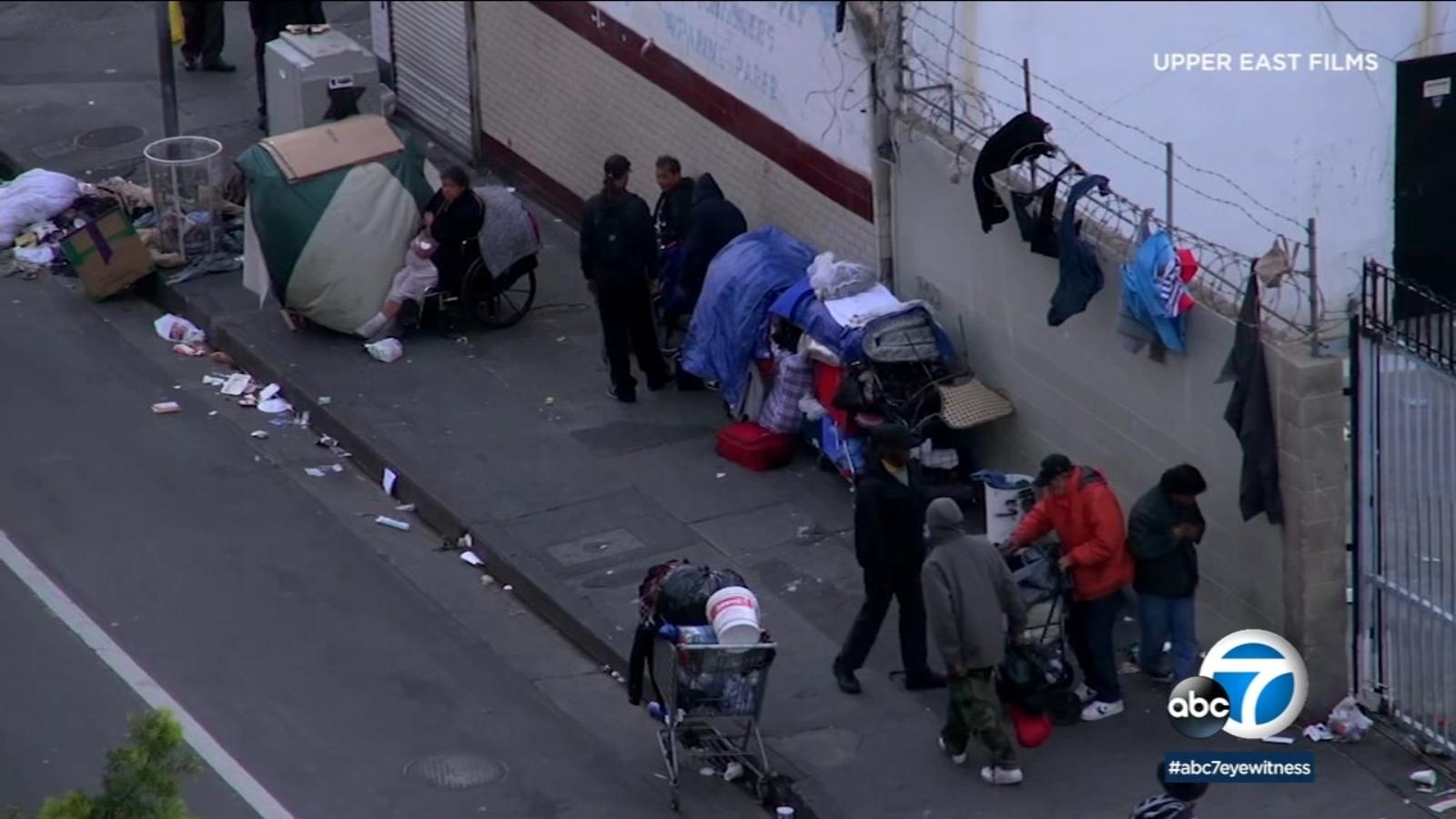
So, many people, after the government forcibly took their homes, drove them out, and left them homeless on the streets—their final fate, their final moments—we’ve seen many reports on this before, but it was just seeing reports. Today, we went ourselves to the refugee camp, visited them, and asked them. One by one, they told us their stories. Many froze to death or starved on the streets. And when they were already lying dead in the street, that’s when the government showed up. Only once people were dead did they appear. And what did they do then? They had the hospital take the bodies—some of them not even fully dead, still partially frozen—and they sent them to the hospital, using them as experimental tools, for human trials, or to sell organs—giving them to the rich, the powerful, so they could prolong their lives. In other words, even in death, the people are still drained, their last bit of dignity taken. This is the typical, inhumane system of a private, exploitative regime.
What is even more unbearable to people is that these Western government officials at the same time grant wild animals the so-called equal right to life. They allow wild animals to roam freely in the streets; they even let stray dogs, those unrestrained dogs, rampage as they please. These dogs can’t just be punished or driven away; they have the freedom to do as they like, even if they bite people. And yet, us humans—us living human beings—under these so-called laws that falsely claim we are all born free and equal, we don’t have a shred of that right. Not even a bit of animal rights. Look, it is we, these people, who pay taxes to them, who contribute the most, who have given the most blood—yet in the end, we face this fate. We are treated even worse than dogs, worse than animals. Are we not being treated like non-human beings? And these officials, they are even more inhuman—they are even more like parasites on humanity.
In fact, these theoretical sciences are not some advanced, esoteric knowledge. They don’t require those so-called investigative data or experimental statistics that the Western scientific community has been misled by. Because, 12 years ago, when we hadn’t even moved to the West, I, relying solely on my own reasoning ability, on scientific logical deduction, based on voluntary science and voluntary principles, deduced the cause of the disease arising from the decayed Western system, as well as its inevitable consequence. When I deduced it back then, according to their logic, their population would not grow, but would decline, eventually leading to a kind of demographic extinction. So, 12 years ago, I published a book. In 2014, I published this book called “The Common Mission and Aspiration of Humanity,” which was written in Chinese. It was 126,000 Chinese characters, and if translated into English, it would be about 200,000 words. If everyone can read it, you will be deeply moved by those views I expressed back then. But in China, this book could not be published publicly, and in the West, in English, it couldn’t be published either. So, we couldn’t promote these ideas about this economic issue. I hope that in the future, everyone can take time to translate it into English and post it online.
So, I’m telling you this address to explain that a deep dissection of a problem can be fully deduced using scientific theory and logic; it doesn’t necessarily require spending a lot of money, or vast human and material resources, to conduct some so-called social investigation. Because, 12 years ago, we hadn’t even moved to the U.S. or Canada, to live in the West—we hadn’t come at all. We deduced it purely from our own reasoning ability, from scientific logic. Based on voluntary science, voluntary principles, we deduced that the cause of the disease arising from the decaying Western system, as well as its inevitable outcome. When I deduced it back then, according to their logic, their population would not grow but would decline, ultimately leading to a demographic extinction. So, 12 years ago, I published a book—in 2014—I published that book called “The Common Mission and Aspiration of Humanity.” It was written in Chinese—126,000 characters, and if translated into English, it would be about 200,000 words. If you all can read it, you will be deeply moved by the insights I had back then. But in China, this book could not be publicly published, and in the West, in English, it also couldn’t be published. So, we couldn’t promote these ideas on this economic issue. I hope that in the future, everyone can take the time to translate it into English and share it online.
I mention this address to tell everyone that a deep dissection of a problem can be fully deduced using scientific theory and logic; it doesn’t necessarily require spending large amounts of money or vast human and material resources to conduct a so-called social investigation. Because, 12 years ago, I hadn’t even come to the U.S. or Canada, hadn’t lived in the West—I had never been there. We had already deduced it. And then, over these years, I put it into practice here, experiencing it firsthand, and in the end, each living person in that reality has already verified the theory we described back then. It’s just that today, we have elevated it to this system of the parasitic regime of the lunar calendar—this is a further, deeper analysis.
So, our next step in the analysis is still focused on the fertility rate of the local, native population, which is increasingly low, far lower than the number of newborns. Then, we must further analyze whether we can have more newborns. And, when we talk about newborns, in this modern system, of course, you need marriage, right? This is because marriage and childbearing are still the main ways; that is, marriage and childbearing require love, right? So, we must also analyze whether, under this Western system—of course, also including some Eastern countries as well—this system is conducive to people getting married, at least falling in love, and then having children. Here, we must logically and realistically conclude from this.
So, these corresponding material conditions are essential. The key one, of course, is housing. If you don’t even have a home, then, as a human, how can you bear a child? Where would you live? After all, humans are not wild animals; we don’t have the innate resistance or fur that wild animals have. We must rely on a home. And after the child is born, you must raise that child to adulthood, which takes about 18 years. During this long period, you must have economic support. In a society where everything relies on you paying out, you must have sufficient, stable income, right?
So, as we analyzed earlier, without a home, it is very difficult for anyone to sustain themselves. If a man doesn’t even have a house, he can’t support himself, and you ask, what woman would be willing to marry him? Even if she did marry him, how could you dare to have children, to get pregnant? So, it’s not that Western people, the general population, are unwilling to have children, or that they just prefer single life. The fundamental reason is that they simply can’t live in love. They can’t get a woman to live with them, and they certainly can’t get their wives to willingly bear children, to have more offspring. And the so-called single-hood advocates, these women who don’t want children and just want to live alone—this is all a lie created by those reactionary officials and the so-called scholars they raised, the elite class. They deliberately mislead everyone, deliberately sow discord. And although the Western media is often praised for so-called press freedom, every single media outlet is run by these elites. Because, to run a media outlet, you must have substantial money. And generally, this media outlet can’t make direct profits, so it must be funded by these backers, and those who fund it naturally speak for them. Of course, they mislead people, deceive them, and suppress the general public.
Therefore, it’s not just that all Western private media are unreliable; what they say is rarely true. In fact, a large portion of it misleads people, creating misconceptions, diverting the focus, covering up the corruption and reactionary nature of the elites, and defaming the misfortune of the general public. And in the Western scientific community, they often bring out these so-called scientists or experts to conduct what they call scientific verification. But these experts’ verifications are even more deceptive; they are even more deeply misleading, carried out by the so-called most elite, most profound levels of power, to deceive everyone. The result is that the Western scientific community also operates under a typical hierarchical dictatorship. This is the fundamental fatal flaw of their science, which is why, in most cases, it serves as fake science. You can take a look at that article called “The Fatal Malady of Modern Science and How to Solve It,” and you will see it very clearly.
So now we have seen that the corrupt, reactionary, and evil system in the West has led to these outcomes: the lifespan of the native-born people is getting shorter and shorter, and their mortality rate is rising higher and higher, while at the same time, the marriage rate of those having children is also declining. As we do this, we compare with the three major population-growing countries in the world, and we see that they have completely different systems and conditions.
So, first of all, these three countries—and it’s not just them, but these three typical population giants—they all do not impose property tax. Take China, for instance: there, not a single cent of property tax is collected. Only when you buy a house, you pay a one-time transaction tax, and that tax rate is very low—only about 1%. After paying it once, there is no further tax. Likewise, India, as well as other Asian countries, also hardly impose it; if they do, it’s just a small percentage in the cities—maybe 1%. In rural areas, almost none is imposed. Their population, after all, mostly resides in rural areas. Not imposing this tax means what? It means that the people, their rights, all have free, even unconditional, housing rights. This is their basic livelihood, their most fundamental human right, even a basic animal right—it is protected, right? And this basic freedom allows people to live freely; it includes building a home. The government hardly intervenes; it just ensures safety, provides basic security and inspection, but it does not interfere with the cost; the fees are minimal, almost negligible. In this whole process of building a house, the government basically does not interfere, because, in fact, you are the one most concerned with your own safety. You care about your safety the most—more than any government official. And those government officials are not professional experts; they don’t have the money to conduct professional inspections. So, why should they intervene, right? Thus, basically, everyone has the freedom to build their own house; this freedom is what makes people’s lives easier, more relaxed.
Because in such a country, in this kind of environment, it shows that the people’s property is truly theirs. The government also recognizes that it is your own house. Thus, you are responsible for your own house; you manage it yourself. The government should not have the right to interfere with you, right? As long as it is your own home, you live in it yourself, and it doesn’t endanger public safety—if you build it yourself, that is something your family bears responsibility for. Right? If you want to live, you do so; if you want to harm yourself, that is your own matter. As long as you don’t harm others, don’t infringe on others’ safety, then the government should not interfere. But in this situation, when we compare to the West, especially in places like Canada, this reactionary, corrupt system in the West not only doesn’t provide any support to the people, it doesn’t give them any housing; on the contrary, it goes further. Not only do they not allow you to have a house freely, they impose property taxes, and they restrict you, limiting how you improve your house, how you make it suit your own desires. They insist that every aspect—whether you build, renovate, or repair—must conform to their standards. What kind of twisted logic is this? I pay for it myself, and yet, after paying you, I don’t even have the right to decide how to use my own money. You say we are still human—this is just a classic form of slavery. I give everything to you; my whole being belongs to you. Whatever you ask, I must do. Whatever you arrange, I must obey. Is this really a society with human rights? This is utterly absurd, pure evil to the extreme, isn’t it? This is completely worse than any developing country in the world; it is worse than even the most evil ancient slavery systems in human history.
And the government, it forces these so-called standards—these property valuation standards—on the people, requiring them to comply with a unified standard that they desire. This is fundamentally unscientific, because they have no scientific capability, no scientific education. It is not for the so-called happiness of the people; it is clearly to harass the people. They know that if people have to follow these rules, it is very difficult. And when it’s difficult, you will inevitably violate it. And once you violate it, they fine you. They say they collect your property tax, but they don’t stop at that; they don’t just fine you—they seize your property. They fabricate an excuse. Especially, they mix this general property tax with specific cases—like if you have more space, they target that. They use this property valuation law to impose it on you. Even your grass—your lawn—they say you must plant a certain grass. If it’s too tall, for example over 6 inches, you must immediately cut it. Even renovating your house—you must follow their standards. If any danger arises, if you need repairs, you have to report it. If they don’t approve, or if they simply don’t get around to approving it, they fine you again. They might seize your house—this is pure banditry. This is even worse than slavery; in slavery, at least you were just a laborer—but this evil surpasses that. Isn’t it so?
So, this system they have, it clearly has these two aspects. First, they collect from you all kinds of additional fees—whether you apply for permits, whether you renovate, whether you rebuild, you must pay fees. You have to pay an application fee, and that fee must comply with their regulations. And for that, you must hire their designated, officially approved inspectors. These inspectors, after collecting high fees from you, they share the profits with them. If you don’t meet the standards, if you don’t fulfill the conditions, they issue a fine. They decide everything; this is a major source of their financial revenue. And if you can’t bear it—if you keep getting fined—you still can’t afford it, even if you have money. They will confiscate the house. They then immediately try to find a new buyer. They take the house and sell it—this way, instead of slowly collecting a few hundred dollars a month, a few thousand dollars a year, they seize it all at once. They sell it for tens or even hundreds of thousands. That’s how they profit more. And the key is, once sold, the new buyer also takes on this tax, and thus the cycle repeats—this new person becomes the next victim of these taxes.
So, I said, this West, this so-called open, immigrant country, it is not at all for the people from abroad. It doesn’t even treat the local people as human; how could it be for people from outside? It is clearly tricking people from abroad, bringing them in as new slaves, just to extract their money once and for all—to deceive them into buying houses, and then trap them, keep them as this exploited, perpetual labor. This is the true purpose of their immigration. So, we, as immigrants from abroad, in fact, we don’t experience real equality with the locals; we are just the targets of those who have been brainwashed. The true racial discrimination, the real racial oppression, comes from these government officials. Because only these officials, deep inside, know that bringing you in as immigrants is not for your benefit, it is not so you can have a better life or freedom here—no, it is to treat you as a sucker, to treat you as a deceived target, so that you become their labor. Thus, I must say, I will be even more merciless to you, even more cruel, targeting those illegal infringements, especially focusing on you immigrants—people with no rights, completely powerless, unable to resist.
So, I said, this so-called political principle in the West—this idea of banning racial discrimination—even that is a lie; it is a deception created to trick people from overseas, to make them come and settle here, while they, on one hand, say they protect you, they ban racial discrimination—on the other hand, I’ve said it, they and the vast majority of locals are also victims; they themselves do not have the upper hand. They are not naturally inclined to discriminate against us immigrants. The real racial discrimination, the real oppression, comes from these government officials. Of course, you can’t even say that they are racists; they just think that immigrants are easier to exploit, because you are less likely to resist. As outsiders, you are fewer in number, and you have even less power. As for whether they originally discriminate against us, it’s all just that, if they don’t admit it, then the law is what they say it is. They say it’s not a violation—if they don’t admit it, it’s not a violation. In other words, they act as if they are above the law. In ancient feudal slave societies, they didn’t have a lot of formal laws either; these laws were few, and yet the Western reactionary scholars criticized them, saying that it was “human bondage” rather than law. But you, too, do not follow the law; you, yourself, are also not respecting the law. And yet, you still get punished. Not respecting the law, in their eyes, is the crime, right? And if they say it’s not illegal, they just claim it’s lawful, and when you sue them in court, the judge always sides with them, always protects them. Even if it’s illegal, they say it’s legal; you have no way to seek justice. The last place you could seek justice is even more unjust. So, you see, their real infringement, their real racial discrimination against immigrants, is these officials, who are not only not recognized, but they also strike back against you. In short, we, the people, are wrongfully accused; after we sue, we must also pay the government, pay the accusers, pay the powerful. They are not just robbing your money; they are violating the law in doing so, and you still have to pay them this extortion fee. Is there any bandit in the world like this? This is a thousand times more evil than any robber; this is evil to the extreme.
So, let’s summarize this. In Western society, for the vast majority of ordinary people, from birth, it is extremely difficult; you can barely survive. You only survive because they need you as a laborer, and so they give you a chance to live. But they put countless shackles on your neck—these bandit-like chains—and the government can seize your property at any time, legally or illegally. What’s most evil is that, after seizing your property, they then go even further to demand you pay them back—this robbery fee. And when you take them to court, they hide behind this so-called independent justice, and in the end, they force you to pay. When you spend a lot on legal fees, some people, even if they dare not do it, must hire a lawyer. The lawyer charges astronomical fees, and after all this legal battle, almost every single time, the court rules in favor of the government. And when the government wins, you, as the plaintiff, must pay all their costs—the government’s legal fees, the lawyer’s fees. Almost every lawyer you hire, you will lose. The courts always side with the lawyers. And even if you hire a lawyer, if it’s the government on the other side, you still lose. Both sides, you lose money. This is how the entire Western government system is—a giant fraud syndicate, each part more cunning, each part more sinister. If you don’t resist, you will lose everything. So, we, the vast majority of immigrants, we have all been deceived, not knowing how evil the Western government is. A lot of us, as Chinese immigrants, we apply the Chinese system to the Western system, thinking that since China didn’t impose property tax, how could the West impose it? And in China, the government protects you; in the West, you thought you would be protected. But in fact, you didn’t realize that the West is a giant scam. If you knew this, how many would still come? How many would still be willing to come?
And, of course, some people might say, “Well, aren’t we at least surviving here in the West, we’re managing to get by?” But you must understand, if it weren’t for this environment, you would live a hundred or a thousand times better. Yes, you are barely surviving now, but under these rules, it is a process of staged oppression—stage by stage, they strip you, they reduce you to a person with no rights. Today it’s not you, but next time it could be you. This is not just a matter of chance; it is a systematic, step-by-step process. So, no one can escape this trap; the chains are already around your neck. You just don’t know when they will tighten. And, moreover, as a person, you are always in this oppressed state, always in this tense condition—so, how can you be truly healthy? How can you not die young? This is why, in the West, even though they boast of being a high-level, developed country, the average lifespan is still far lower than many Eastern countries, even lower than China’s life expectancy—it is a fatal trap.
At the same time, when you compare it to countries like China, India, or Nigeria, precisely because they don’t impose property taxes and because the government does not interfere with your personal production or construction, the people, in turn, neither suffer as much nor lose their basic security; they have a basic freedom to develop themselves, to sustain their basic life. There is no problem. Especially in those rural areas, they have their own land; they cultivate their own food. So, in terms of food, they are self-sufficient. It is all about how you live, how you survive better. Thus, even if you see in India or Nigeria that there are many poor people in the big cities, have you realized that those poor people, they actually have their own houses in the countryside, their own, even large courtyards. They go out to the city, but they still have a return path. Unlike in the West, in the West, there is no way back. Across the entire country, you have no fallback. You gather in the city, even in mountainous areas, but you are all stuck; the government, the officials, they don’t let you stay there either. Look at this enormous difference. In the West, it’s as if your home is your prison; you stay in this home, but you can’t live properly. You were born like this—is this really how you live? What hope do you have? You still want this kind of government? You must fundamentally change this system. Ask yourself, do you still have any future here? You must act not just for yourself, but for your descendants.
So, this is why the populations of those Eastern countries can grow steadily in the world—they are able to survive basically, and they keep improving their lives bit by bit. Thus, their population grows slowly. In the West, it has already reached this fundamental, destructive cause.
Of course. So, this is why the populations in those Eastern countries can grow steadily in the world—they are able to survive at a basic level, and they can continue to improve their lives, bit by bit. As a result, their population grows slowly. In the West, it is fundamentally this private destruction that is at the root cause.
As for India, Nigeria, and so forth, they differ greatly from China. The main difference is that only China has excelled in infrastructure construction, urban development, and rural development, even being the best in the world. The key reason is that, although these major population countries all have free living rights and allow people to freely develop their basic life and even encourage private entrepreneurship, China, in addition to this, because it does not impose such taxes, it forces the government to act on behalf of the people to collect revenues—mainly by developing the economy through state-owned enterprises. These state-owned enterprises, in fact, represent a form of state bureaucratic capitalism. Compared to private enterprises, at least it has one advantage: its profits and wealth, in theory, still belong to the people. At the very least, the state controls the money, so when the government has money, it does not need to rely on taxing the people as heavily. Thus, the people’s burden of taxation is relatively protected. In contrast, in India, Nigeria, and the entire West, they do not develop state enterprises; they hand resources over to the private sector. When you hand it over to private owners, the government still has no money. If they don’t impose taxes, then they have no funds to develop. This is why the infrastructure construction in India, Nigeria, and these other developing countries falls far short compared to China.
So, these three countries also have another difference, an increasingly large one: China’s population is also declining in recent years. Now, in the world, the few countries that are still maintaining population growth are mainly India—India has now surpassed China in population—Nigeria, and a few smaller countries. So, why is it that, on one hand, in terms of housing tax, in terms of economic freedom, China is similar to India, yet, when it comes to urban construction and infrastructure, China is far better—not just better than India, but better than all other countries in the world, especially in the East. And this is a huge advantage, since it is essentially built in a desert. So, why is it that, while China has done better and better—while the people have become wealthier, the government has more money—at the same time, the birth rate, the fertility rate, is dropping? What kind of logic is this? I will give you further analysis on this.
In the end, the thing you should be doing most—you don’t do—and the thing you shouldn’t be doing—you do. As a result, you cause harm to the people. This makes your government something even worse than a system of slavery, because a system of slavery still tries to build its own business, still wants to improve the livelihood of the slaves. But here, you do the opposite. The Western government, in fact, is a group that, precisely because it imposes high property taxes, it pushes people into a state of ignorance and helplessness, abusing their power to strip people of their basic rights, and bringing them to a desperate, extreme situation.
Because of this imposition of high property taxes, it not only strips people of their basic rights, but it also causes the government to become even less willing to do what it should, even less willing to promote economic development. It has neither the motivation nor the capability; it simply wants to coast on its position. It no longer wants to engage in hard work. On the contrary, it fears economic change, because if the economy changes drastically, it might undermine their entrenched position. Thus, they only think about stability; they just want to keep everything as it is, and that ultimately leads to this kind of worsening stagnation, this gradual decline.
All right, let me add this as well. In terms of the economy, the Western governments are also, like India, almost entirely not engaged in economic development. In fact, Western governments absolutely do not develop the economy. Their surface-level reason is that you cannot let the government use public power to do this, as it would undermine public nature. This is completely another contradiction, another deception. After all, the purpose of establishing a government by the people is precisely to allow it to play the greatest role. And what is its greatest role? It should be to develop the economy. The government not only has this responsibility, but also the ability, since it is the largest public trust organization; it controls the people, it holds the power of opinion, and externally, it can engage in comprehensive exchanges with other governments.
Another major cause of the continuing decline of native Western populations, as well as the proliferation of various social evils, is this: the law and judiciary openly declare that government officials are not accountable to the people, but only to the state—that is, to the government itself. Even when officials commit unlawful acts against citizens, as long as they claim they were acting in the interest of the state or in the course of law enforcement, they can invoke “sovereign immunity.” Not only are they free from punishment, but they may even be rewarded, while innocent victims receive no compensation whatsoever, even in civil cases.
According to this view, this openly exposes what is regarded as the true nature of the regime: a system combining fascist tyranny, slavery, and parasitic exploitation. From this perspective, all other claims of democracy, human rights, civilization, and similar ideals are merely carefully constructed deceptions and traps.
How, then, could people who are forced, harmed, deceived, and compelled to live within so many alleged traps of suffering and destruction avoid shortened lives or the disappearance of future generations?
The reason these systems are still able to maintain themselves and continue attracting foreign immigrants is that most of their harmful practices are carried out behind the scenes, or are established through judicial precedents that are difficult for outsiders to discover. Even when immigrants experience mistreatment, many feel they have no way back and are reluctant to speak out, preferring not to publicize their hardships. Seeing that even many native-born residents do not openly resist, immigrants are even more likely to endure things passively.
According to this viewpoint, privately owned media serve as accomplices of the ruling system, helping to present an image of stability and prosperity. The scientific establishment is likewise seen as using its authority to justify and legitimize the system, blurring distinctions between right and wrong and making it difficult for ordinary people to recognize the truth.
The author further argues that many people lack sufficient geographical knowledge and therefore fail to realize that the principal advantage of Europe and North America lies in their possession of some of the world’s most favorable geographical environments and natural resources. According to this argument, even without advanced industry or technology, these natural advantages alone would be sufficient to support comfortable living conditions for large populations. Therefore, other countries should not blindly admire or imitate the West.
The author warns against uncritically adopting various Western social and political practices, and also criticizes both Western political systems and Marxist or communist critiques of the West, arguing that neither provides genuine direct democracy. The author further contends that the relative beauty of many Western environments should not be attributed to their governments or institutions.
Instead, the author proposes that the entire Earth should belong collectively to all humanity. People of every nation should enjoy the right to live, develop, and move freely, equally, and without charge anywhere in the world, provided they abide by decisions made through direct democratic participation by local populations and humanity as a whole. According to this vision, Western governments should not have the authority to restrict such movement, and countries with superior geographical resources should compensate those with poorer natural conditions.


