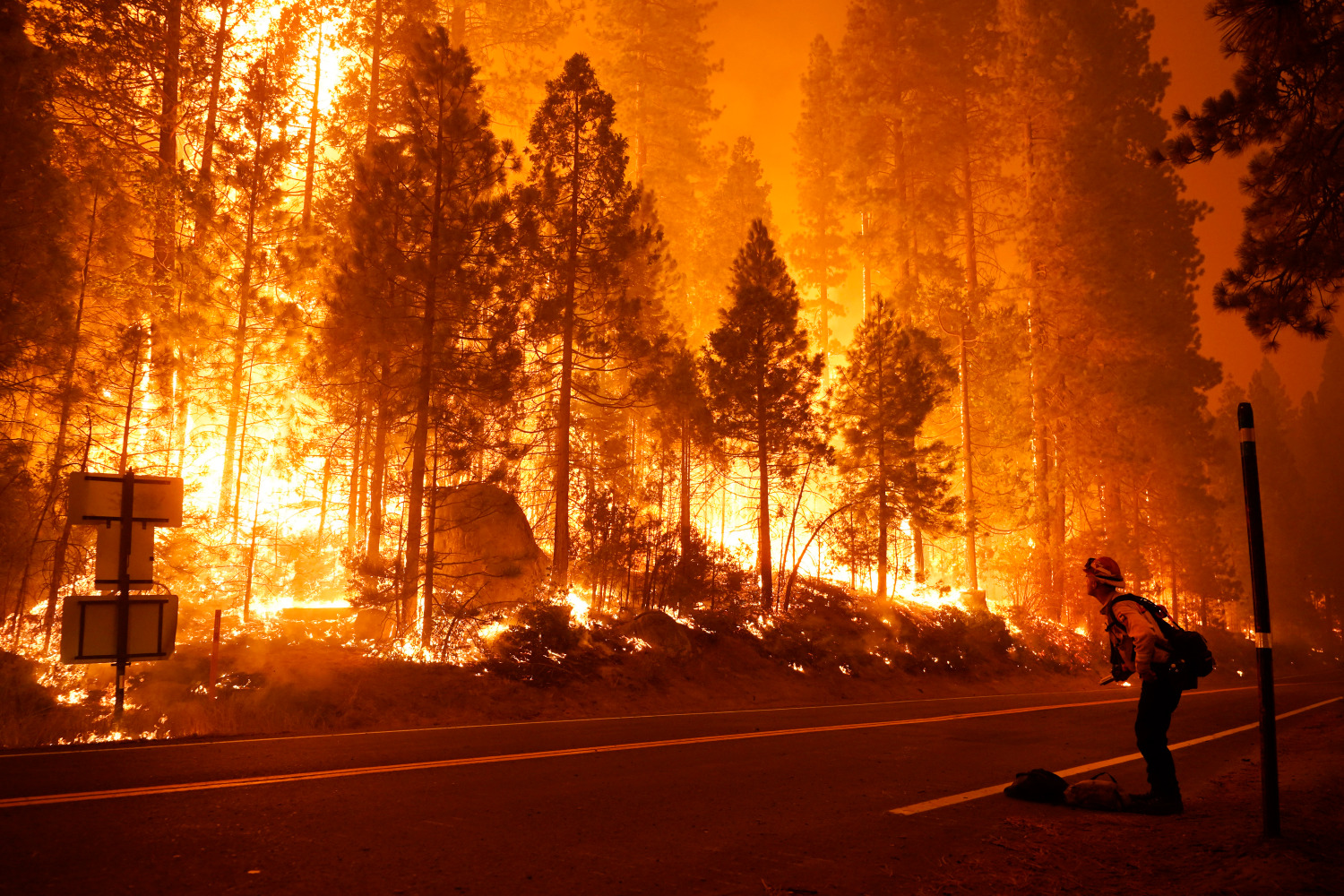
After the recent major wildfire in northwestern Ontario, Canada—even though it didn’t directly reach Fort Erie in southern Ontario, the resulting heavy smoke and air pollution spread across the entire area, covering the sky over Fort Erie, the Great Lakes region, and even parts of the United States. This is both a natural disaster and a man-made catastrophe, and it makes us have to act with caution(During this time, I was subjected to baseless attacks and relentless obstruction from certain individuals who oppose for the sake of opposition, which left me exhausted and with no time to comment on this disaster. It wasn’t until yesterday, when a principled good man stepped in to uphold justice, that I was finally able to calm down and reflect on this major fire incident), Here is what I have to say spontaneously:.
1, Every year, many fires occur in countries like Canada, the United States, and Australia. Could it be that this is inevitable, unavoidable, or even impossible to reduce? This does not conform to the fundamental laws of nature – the law of natural balance. Nor does it align with the fact that for thousands of years, only the indigenous people have lived here in harmony, reproduced and developed. Otherwise, with the primitive tools and technologies of the ancient times, wouldn’t the indigenous people have already experienced a decline in population and been forced to migrate?
2,Regarding this wildfire, the first thing we need to do is examine the cause of the fire—what exactly started it?
The official report claims that the fire was caused by lightning. We need to analyze this scientifically. Without a doubt, lightning in nature can, in theory, cause fires. However, the probability of a fire being caused by lightning is extremely low—it’s a one-in-ten-thousand kind of chance. Moreover, there have to be specific conditions on the ground as well to make it possible. In other words, lightning is just a trigger. If there isn’t enough fuel on the ground, lightning alone can’t start a fire. Also, there were multiple ignition points in this fire. Although the exact number hasn’t been officially reported. It’s unlikely that every single one was caused by lightning. In fact, it’s possible that even the very first fire was not started by lightning. According to official statistics, natural causes and human causes have each accounted for about half of all wildfires in the past. So, for this fire, it’s likely no exception.
3, The official explanation is only verbal; there is no actual evidence. That is, there is neither satellite imagery nor on-site surveillance footage showing how the lightning allegedly caused the fire. In theory, such video evidence could absolutely be obtained, but there is none—not even any footage of so-called dry thunderstorms from that period. So this claim is essentially lacking in evidence. More importantly, it doesn’t really align with meteorological science. Why is that? If we consider Canada—and specifically Ontario’s geography and climate knowledge—it doesn’t quite fit. They say that June to September is the peak season for wildfires, but that reasoning doesn’t hold up.
4, Because from June to September, there is still relatively a lot of rain. While it’s a bit less than in spring, it is still the second wettest season of the year. The truly dry period is actually autumn—September to November—when rainfall is much lower. And during June to September, plants are lush and full of moisture, not just according to legislators, but also in the forests—there are very few dead branches or fallen leaves then. It’s only in autumn, when Canada is at its most beautiful with red leaves everywhere, that the leaves begin to fall and create a lot of dry fuel, which is when things really become flammable.
5, Therefore, the claim that June through September is routinely the season when natural wildfires occur every year does not, in my view, stand on solid scientific grounds. On the contrary, human-caused fires are more likely during this period. The reason is that summer vacation begins in late June. From then until September, many families have both the time and the opportunity to travel, camp, and spend holidays in forests and other natural areas. At the same time, northwestern Ontario generally enjoys a cool and comfortable summer climate. This year in particular, temperatures have been relatively mild, with days above 30 degrees Celsius being uncommon. Cooler weather not only reduces the chance of naturally occurring wildfires but also attracts more people into forested areas for recreation. During this season, many people go camping, light campfires, barbecue, or cook outdoors. If these activities are not handled carefully, they can easily ignite a wildfire. That is one of the reasons why a few days ago we republished an article we had written several years ago entitled “Wildfires Show No Mercy; Negligence Is a Crime.” In that article, we discussed in depth how outdoor recreational activities and everyday human behavior can contribute to forest fires if proper precautions are not taken.
As mentioned earlier, the Canadian government has neither used satellites for real-time monitoring nor installed on-site surveillance cameras. Moreover, because there are so few residents in those areas, the relevant supporting facilities and personnel provided by the government are extremely limited. As a result, there is no effective management or supervision of visiting tourists. Consequently, not only are such fires not prevented, but even when a small spark does appear, it is not detected in time, allowing a single spark to gradually grow into a vast wildfire.
6, Another major reason is that for generations, the local Indigenous people developed a set of practices based on natural laws and traditional customs that helped prevent and manage fires. This included the practice of “living with fire.” In spring, they would gather dry branches and fallen leaves from the forest and burn them in a controlled, centralized manner, which was safe. This removed flammable materials and eliminated hidden dangers. This practice had been effective for thousands of years. So why is it now claimed that natural lightning causes unavoidable annual wildfires? If fires had been common throughout history, how could Indigenous people have survived there for millennia, especially with limited means to fight fires? The fact that they thrived and passed on their way of life for generations shows that their fire management methods were truly effective.
7, On the contrary, the Canadian government, led by white authorities, passed two laws that banned Indigenous people from continuing this traditional practice. Not only did they prohibit it, but they also failed to implement any effective alternatives. Logically, with more advanced technology and equipment, the authorities should have been able to clear out flammable materials more thoroughly, which is the real solution. Once those materials are removed, there is no way natural wildfires would so easily occur between June and September.
After all, a single clap does not make a sound. For example, Australia’s catastrophic bushfires in recent years were also caused in part by the buildup of flammable matter. If such material accumulates unchecked, then either natural events like lightning or human error can spark massive fires. All of this demonstrates the reactionary nature of Canada’s institutional system. about “set up reserves for Indigenous people”, but in effect confined them to remote forests, restricting their right to live and develop in other areas like cities or the southern regions. On the surface, it sounds like protection, but in reality, these forested areas are more prone to fires.
At the same time, the government banned the very fire prevention methods that Indigenous communities relied on and did not introduce effective alternatives. Meanwhile, tourists are allowed to enter these forests for activities like camping and barbecuing, without proper supervision. There is no real-time ground monitoring or effective tracking of these activities. As a result, the risk of fire increases, endangering not only local communities but also causing air pollution that spreads to other regions. And now, the government simply blames these fires on dry lightning. Isn’t the government the one that should bear the primary responsibility for this?
8, When it comes to holding government officials and those responsible legally accountable, this is a major blind spot in the legal systems of Canada, the US, and much of the West. As mentioned in the article ‘Institutional Crime,’ Western law is enforced harshly against ordinary people, but officials are rarely held accountable. Even when there are legal provisions that should punish dereliction of duty or abuse of power, in practice, officials are rarely prosecuted. Sometimes the courts even use legal technicalities or doctrines like immunity to let officials off the hook. In Western countries, which control some of the world’s richest natural environments, one would expect there to be many cases of officials being punished for failing to prevent or manage wildfires. However, in reality, such cases are almost non-existent. We don’t see officials being prosecuted, dismissed, or even disciplined for their responsibility in such disasters. So, despite the recurring and often severe wildfires, accountability is practically absent.
9, Even for tourists and ordinary individuals, whether a fire is started intentionally or by negligence, punishments are extremely lenient. We have found cases where a fire caused by an individual killed twelve people, injured dozens, and caused massive losses, yet the sentence was incredibly light—sometimes even a suspended sentence with no jail time. Sometimes its just civil compensation, but how can individuals with no savings or property pay? That’s essentially a bad check. In some cases, compensation is only tens of thousands at most. Meanwhile, when it comes to ordinary people facing lawsuits or claims, the costs and penalties can be enormous. Judges often shield officials with immunity or other legal doctrines, effectively protecting misconduct or even outright abuse. The legal system is supposed to be the last line of defense in society and politics; if that line fails, frontline officials naturally feel emboldened to evade responsibility or overreach where they shouldn’t. Because the West relies on unwritten or precedent-based systems rather than clear written laws in many areas, the result is often lawlessness in practice, with judges free to rule arbitrarily.
10, Therefore, it can be seen that this wildfire, as well as many previous wildfires since Canada’s founding, has been influenced primarily by human factors. In my view, government negligence and laws that run counter to nature and science have played a key role. As mentioned earlier, if we examine this issue according to natural laws, the idea that so-called natural causes are responsible is hard to sustain. Nature follows its own basic principles. One core principle is natural balance, something that in my view has not been adequately recognized in modern scientific research. According to this principle, natural processes tend toward restoring balance. If a fire is started by lightning, that same weather system usually brings rain that puts it out. Otherwise, forests would have burned away long ago, wildlife could not survive, and the earth would be shrouded in smoke and haze. The fact that this is not the case shows that nature has mechanisms to restore balance. Therefore, the likelihood that major Canadian wildfires since Confederation were caused primarily by lightning is, in my view, extremely low. Lightning depends on sufficient atmospheric moisture, and when that moisture is present, rain usually follows. Pure dry lightning is rare, and even then, it is unlikely to cause large fires unless there is abundant combustible material on the ground.
11, The next question is what effective measures should we take to fundamentally prevent and reduce the risk of wildfires? In my view, this should be approached from three aspects: human factors, material and technical factors, and the legal system. First, regarding the human factor, one reason the government has invested too little in Canada’s northwest is that the population there is relatively small. With so few residents, the government fails to provide adequate administration or services, and at the same time, fires are harder to detect early and extinguish quickly. In my opinion, these regions are actually quite suitable for human settlement.
The Great Lakes region has abundant natural resources, yet Canada’s population remains small. Meanwhile, many people around the world wish to immigrate to places with better living conditions, but face restrictive immigration policies. From my perspective, the Earth belongs to all humanity. Animals can move freely across borders, but humans cannot. If more people were allowed to live in these regions, they could improve their own lives while also helping prevent and respond to fires. Growing up in China, I was taught that fire prevention was everyone’s responsibility, with constant public reminders and broad community mobilization when fires occurred. Second, material and technical measures should be improved.
Governments should invest in better monitoring systems, both satellite-based and ground-based, and build higher observation points to detect fires early. Third, the legal system. Laws should both protect forests and impose meaningful penalties for causing fires, whether intentionally or through negligence. Responsibility should not stop at individuals, but extend to officials where appropriate. Overall, I believe Western countries like Canada need to thoroughly reflect on and reform their wildfire prevention and legal accountability systems; otherwise, such disasters and their impacts will only increase.
12, Appropriate migration should be encouraged in these forest areas, with effective local administration and management. Once people live in the area, it becomes easier to set up fire breaks and install automatic fire suppression sprinklers along both sides. At the same time, each district and designated area should have a clearly assigned primary person responsible for fire prevention. In addition, relevant laws should be strengthened. The legal system must ensure that not only civilians who intentionally set fires or cause them through negligence face strict legal punishment, but more importantly, that government officials are also held criminally accountable for dereliction of duty or abuse of power when they fail to fulfill their responsibilities. Public officials are entrusted to protect the communities under their jurisdiction. If they fail to act, neglect their duties, or abuse their authority, they should also be held legally responsible.
In my view, no matter how good the resources are, they can still be wasted or even be turned into the opposite of their benefits. For example, a major wildfire not only destroys the local forests, but also threatens public safety in surrounding communities. Moreover, the smoke and air pollution can spread over vast areas through the atmosphere. In that sense, the damage is not limited to local residents. Its impacts can extend across the country and even affect people around the world.
So, our strategy is not only to run for mayor in Fort Erie, but also to support our volunteer scientific team in working through the engineering and science party to take provincial or even federal governing power. Our goal is to draft scientific and fair laws to protect the interests of all citizens, our ecology, and our forests. This is both essential and extremely important. Therefore, I sincerely ask for everyone’s support.
Attach: Causes Behind the Frequent Wildfires in California and the Wider West


